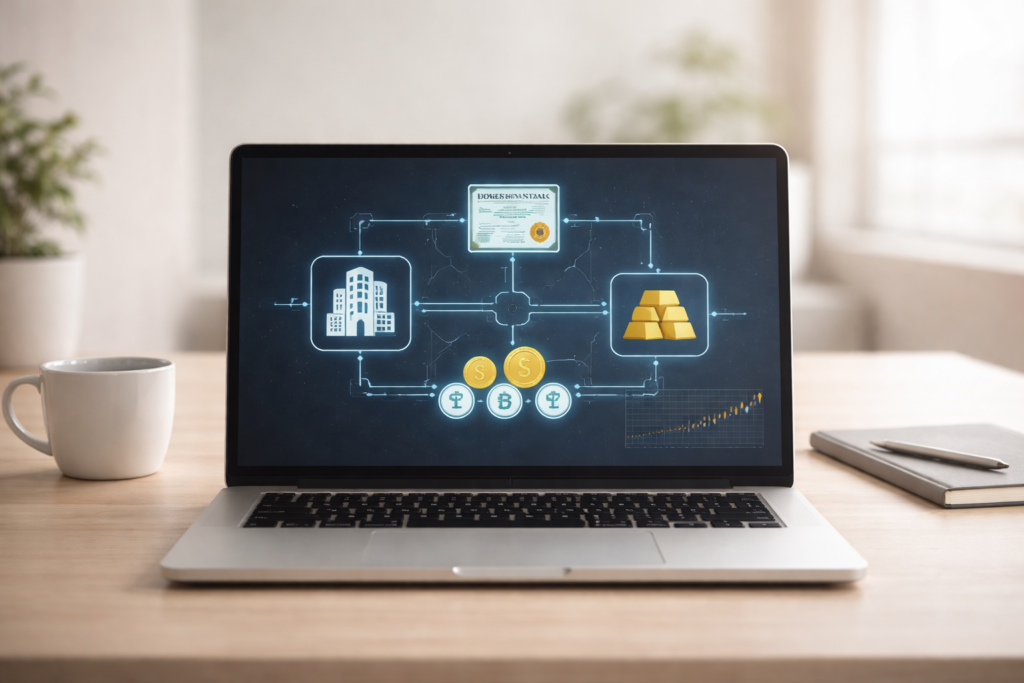

The cryptocurrency industry continues to evolve rapidly, and one of the most important developments gaining momentum is real world asset tokenization crypto. This concept is attracting attention from investors, financial institutions, and blockchain developers because it connects traditional financial assets with decentralized technology.
For many years, the crypto market mainly focused on digital currencies such as Bitcoin and Ethereum. However, the next phase of blockchain innovation is shifting toward bringing real assets onto blockchain networks. Through real world asset tokenization crypto, assets like real estate, government bonds, commodities, and investment funds can be represented as digital tokens.
What makes this trend even more important is the speed at which it is growing. Industry research suggests the tokenized asset market could reach around $612 billion in 2025, and some long-term projections estimate the industry may grow to more than $9 trillion by 2030. This rapid growth shows why investors and institutions are paying close attention to tokenization.
What Is Real World Asset Tokenization Crypto
In simple terms, real world asset tokenization crypto refers to converting ownership of a physical or financial asset into digital tokens stored on a blockchain.
Each token represents a share of the underlying asset. Instead of relying on traditional ownership records or paperwork, blockchain technology records ownership securely and transparently.
Assets that can be tokenized include:
• Real estate properties
• Government bonds
• Commodities like gold
• Private investment funds
• Art and collectibles
Through real world asset tokenization crypto, these assets can be divided into smaller digital shares, allowing more investors to participate in markets that were previously difficult to access.
Why Tokenization Is Becoming a Major Trend
Traditional financial markets often involve multiple intermediaries such as banks, brokers, and clearing houses. These processes can increase costs and slow down transactions.
Blockchain technology offers a more efficient system.
With real world asset tokenization crypto, ownership records are stored on decentralized ledgers. Transactions can become faster, more transparent, and easier to verify.
Several factors are driving the rise of tokenization:
• Increasing institutional adoption of blockchain
• Growing demand for digital financial infrastructure
• Expansion of decentralized finance ecosystems
• Faster settlement for financial transactions
At the same time, the amount of tokenized assets on blockchain networks continues to grow. Recent industry estimates suggest that more than $35 billion worth of real world assets are already tokenized on blockchain platforms, showing how quickly the technology is being adopted.
Types of Real World Assets Being Tokenized
Different types of assets are already being explored within the tokenization ecosystem. These applications highlight the potential of real world asset tokenization crypto.
1. Real Estate
Real estate is one of the most common examples of tokenization. Property ownership can be divided into smaller digital shares, allowing investors to purchase fractional ownership instead of buying entire properties.
The tokenized real estate market alone has already reached more than $15 billion in value, demonstrating strong demand for blockchain based property investment.
2. Government Bonds and Treasury Assets
Financial institutions are experimenting with blockchain based bonds and treasury securities. Tokenization can improve settlement times and reduce administrative costs.
3. Commodities
Physical commodities such as gold, silver, and oil can also be represented by blockchain tokens. Each token corresponds to ownership of the underlying commodity stored in reserves.
4. Private Credit and Investment Funds
Private lending markets and investment funds are also exploring tokenization as a way to attract global investors and improve liquidity.
These examples demonstrate how real world asset tokenization crypto can bridge the gap between traditional finance and decentralized technology.
Advantages of Real World Asset Tokenization
The growth of real world asset tokenization crypto offers several potential benefits for investors and financial institutions.
1. Fractional Ownership
Tokenization allows expensive assets to be divided into smaller shares. This makes investments more accessible to a larger number of people.
2. Increased Liquidity
Traditional assets such as real estate can take time to sell. Tokenized assets may be traded more easily on digital marketplaces.
3. Lower Transaction Costs
Blockchain technology can reduce the need for intermediaries, which may lower transaction fees.
4. Greater Transparency
Because blockchain transactions are recorded on decentralized ledgers, ownership records are transparent and easy to verify.
These advantages are helping drive the rapid expansion of real world asset tokenization crypto across financial markets.
Challenges and Risks
Despite its potential, real world asset tokenization crypto still faces several challenges before reaching mainstream adoption.
1. Regulatory Uncertainty
Many countries are still developing regulations for tokenized securities and blockchain based financial products.
2. Legal Ownership Structures
Clear legal frameworks are required to ensure that token holders have proper ownership rights.
3. Technology Infrastructure
Blockchain networks must scale efficiently to handle large volumes of financial transactions.
4. Market Awareness
Many investors and institutions are still learning how tokenization works and how it differs from traditional financial systems.
As the technology matures, solutions to these challenges are expected to emerge.
The Role of Blockchain Platforms
Several blockchain platforms are positioning themselves as infrastructure providers for tokenized assets. Smart contracts allow financial agreements to be automated and executed securely.
These platforms enable assets to be issued, traded, and managed digitally.
As adoption increases, more blockchain ecosystems are expected to support real world asset tokenization crypto, creating global marketplaces where investors can access tokenized financial products.
Also Read – Crypto Market Manipulation Explained and Warning Signs
Future Outlook for Tokenized Assets
The future of real world asset tokenization crypto looks promising as financial institutions and technology companies continue exploring blockchain solutions.
Some projections suggest the broader tokenized asset market could eventually reach between $16 trillion and $30 trillion in value within the next decade.
Possible developments include:
• Tokenized real estate marketplaces
• Blockchain based bond issuance
• Global trading platforms for tokenized assets
• Integration between traditional banks and blockchain networks
• Automated financial systems powered by smart contracts
If these innovations continue to develop, tokenization could significantly transform how global financial markets operate.
Conclusion
The emergence of real world asset tokenization crypto represents an important step in the evolution of blockchain technology. By bringing physical and financial assets onto decentralized networks, tokenization has the potential to make investing more accessible, efficient, and transparent.
Industry data already shows strong momentum, with billions of dollars worth of assets tokenized and the market expected to grow rapidly in the coming years.
Although regulatory and technological challenges still exist, the continued involvement of financial institutions and blockchain developers suggests that real world asset tokenization crypto could become a major component of the future financial system.
For investors watching the crypto industry closely, this trend may play a key role in shaping the next generation of global finance.